
Insulated Flexible Duct in Kenya | Flexible Air Duct for Air Conditioning & Ventilation
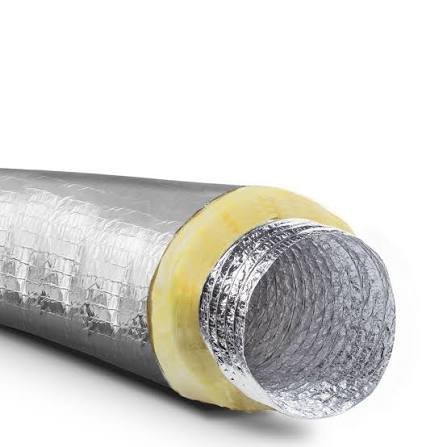
Insulated Flexible Duct in Kenya | Flexible Air Duct for Air Conditioning & Ventilation
Looking for insulated flexible duct in Kenya for air conditioning, ventilation, air distribution or HVAC installation?
Kingsman Engineering & Industrial Insulation Ltd is a leading importer and supplier of HVAC products, flexible ducting, air-conditioning materials, refrigeration products, insulation solutions and related engineering materials in Kenya and East Africa.
We supply HVAC products and materials for HVAC contractors, refrigeration technicians, engineers, businesses, institutions, commercial buildings, industrial facilities and project installers.
Our HVAC range includes flexible ducting, insulated flexible ducts, non-insulated flexible ducts, HVAC grilles and diffusers, ventilation products, air curtains, HVAC insulation, copper pipes, refrigerants, vacuum pumps and other air-conditioning and refrigeration installation materials, subject to current availability.
If you need insulated flexible duct in Nairobi, Kenya or elsewhere in East Africa, contact Kingsman Engineering for current availability, product specifications, quantities and quotation information.
Call or WhatsApp: 0722 209 507 / 0721 953 570
Email: info@kingsmanengineering.co.ke
What Is Insulated Flexible Duct?
Insulated flexible duct is a flexible air duct with an insulation layer surrounding the air-carrying duct.
It is commonly used in HVAC systems where the air travelling through the duct needs additional thermal protection compared with a non-insulated flexible duct.
The insulation layer can help reduce unwanted heat transfer between the air inside the duct and the surrounding environment.
Depending on the product construction and system design, insulated flexible ducting may be used for:
- Air-conditioning systems
- Supply-air distribution
- Conditioned-air distribution
- Ventilation systems
- Fresh-air systems
- Return-air applications where suitable
- Equipment connections
- Grille connections
- Diffuser connections
- Branch duct connections
- Concealed ceiling installations
- HVAC retrofit projects
The exact performance and application suitability depend on the construction and specification of the particular product.
Insulated Flexible Duct Supplier in Kenya
Kingsman Engineering supplies HVAC and insulation products to customers in Nairobi and across Kenya.
If you are sourcing insulated flexible duct, provide as much of the following information as possible:
- Required duct diameter
- Required length
- Quantity
- Insulation requirement
- Application
- Air-conditioning or ventilation use
- Equipment being connected
- Project location
- Delivery requirements
For larger projects, provide:
- HVAC drawings
- Duct schedules
- Material schedules
- Bills of quantities
- Project specifications
This helps with accurate product selection and quotation.
Because available products and specifications can change, always confirm the current product specification and availability with Kingsman Engineering before ordering.
Why Use Insulated Flexible Duct?
Insulation is important in many HVAC installations because the temperature of the air inside the duct can differ significantly from the surrounding environment.
Depending on the system, insulation may help with:
Thermal control
The insulation layer can reduce heat transfer between the duct interior and surrounding space.
Condensation management
In suitable air-conditioning applications, insulation can help reduce the risk of condensation forming on the outside of a cold-air duct when environmental conditions are appropriate.
Energy performance
Reducing unwanted heat gain or heat loss can support the intended temperature performance of an HVAC system.
Air-conditioning applications
Insulated flexible duct is commonly considered for conditioned-air distribution where thermal control is required.
The actual insulation performance depends on the material, thickness, installation quality and operating conditions.
Insulated Flexible Duct for Air Conditioning
Insulated flexible duct can be used for suitable air-conditioning and conditioned-air distribution systems.
Potential applications include:
- Supply-air distribution
- Branch duct connections
- Diffuser connections
- Grille connections
- Equipment connections
- Concealed ceiling installations
- Commercial air-conditioning
- Residential air-conditioning
- Office HVAC systems
- Hotel HVAC systems
- Institutional HVAC systems
The duct should be selected according to:
- Required diameter
- Airflow
- Air velocity
- Static pressure
- Duct length
- Insulation requirements
- Equipment connection
- Installation environment
For an air-conditioning project, the insulation requirement should be confirmed before purchasing the duct.
Insulated Flexible Duct for Ventilation
Insulated flexible duct can also be used in selected ventilation applications.
Potential uses include:
- Fresh-air distribution
- Conditioned ventilation air
- General ventilation
- Branch ventilation
- Ventilation equipment connections
- Air distribution systems
- Commercial ventilation
However, insulation is not automatically required for every ventilation application.
Whether an insulated or non-insulated duct is appropriate depends on the temperature of the air, surrounding environment, condensation risk and HVAC design.
Insulated vs Non-Insulated Flexible Duct
The main difference is the presence of an integrated insulation layer.
| Feature | Insulated Flexible Duct | Non-Insulated Flexible Duct |
|---|---|---|
| Integrated insulation | Yes | No |
| Thermal control | Better suited where required | Limited unless separately insulated |
| Condensation considerations | Can assist when correctly specified and installed | May require separate insulation |
| Air-conditioning applications | Commonly considered | Suitable only where system design permits |
| Ventilation | Suitable for selected applications | Commonly used where insulation is unnecessary |
| Installation | Requires attention to insulation integrity | Simpler construction |
| Selection | Based on HVAC and thermal requirements | Based on HVAC requirements |
Neither type is automatically correct for every application.
The choice should be based on the HVAC design and operating environment.
Insulated Flexible Duct Sizes in Kenya
Insulated flexible duct may be required in different diameters depending on the HVAC system.
Common flexible duct sizes include:
- 4 inch – approximately 101.6 mm mathematically
- 5 inch – approximately 127 mm
- 6 inch – approximately 152.4 mm
- 7 inch – approximately 177.8 mm
- 8 inch – approximately 203.2 mm
- 9 inch – approximately 228.6 mm
- 10 inch – approximately 254 mm
- 12 inch – approximately 304.8 mm
These are mathematical imperial-to-metric conversions.
Actual HVAC products may use nominal sizing, and manufacturer dimensions can vary.
For exact compatibility with equipment, grilles, diffusers, collars or fittings, confirm the actual product specification before ordering.
How to Choose the Right Insulated Flexible Duct Size
The correct diameter should be selected according to the HVAC system rather than simply choosing the largest available duct.
Consider:
1. Required airflow
Determine how much air the system needs to move.
2. Air velocity
The duct diameter affects the velocity of air travelling through the duct.
3. Static pressure
Duct size and system resistance affect pressure requirements.
4. Duct length
Longer duct runs can create additional resistance.
5. Number of bends
Sharp or excessive bends can increase resistance.
6. Equipment connection
The duct must be compatible with the equipment or fitting being connected.
7. Insulation requirements
Determine whether integrated insulation is required and what specification is appropriate.
8. Installation environment
Consider ceiling spaces, plant rooms, exposed areas and other environmental conditions.
How Much Air Can Insulated Flexible Duct Carry?
There is no single airflow rating for all insulated flexible ducts.
Airflow depends on the complete system and can be affected by:
- Duct diameter
- Air velocity
- Duct length
- Number of bends
- Compression
- Fan capacity
- Static pressure
- System resistance
- Grille or diffuser resistance
- Connection design
- Installation quality
- Duct construction
For this reason, it is not appropriate to assign one universal CFM value to all insulated flexible ducting.
For engineered HVAC projects, use the project’s airflow and pressure calculations to determine the appropriate duct diameter.
Insulated Flexible Duct and Condensation
Condensation is an important consideration when cold air travels through ductwork located in a warmer or humid environment.
An appropriately specified insulation layer can help reduce heat transfer and surface condensation risk.
However, insulation alone does not guarantee that condensation will never occur.
The result can also depend on:
- Air temperature
- Surrounding temperature
- Relative humidity
- Insulation specification
- Insulation thickness
- Vapour control
- Installation quality
- Gaps or damaged insulation
- Operating conditions
Where condensation control is important, the complete duct and insulation system should be specified appropriately.
Insulated Flexible Duct and Energy Efficiency
Insulated ducting can help reduce unwanted heat transfer between the air inside the duct and the surrounding environment.
For conditioned air, reducing unwanted heat gain or heat loss can help the HVAC system maintain the intended air conditions.
However, overall HVAC energy performance depends on much more than duct insulation.
Other factors include:
- Equipment efficiency
- Fan efficiency
- Duct design
- Air leakage
- Duct length
- Air velocity
- System pressure
- Controls
- Maintenance
- Building envelope
Insulated flexible duct should therefore be considered as one part of the complete HVAC system.
Insulated Flexible Duct Construction
The exact construction varies between products and manufacturers.
An insulated flexible duct may generally include:
- Inner air-carrying duct
- Insulation layer
- Outer protective vapour/cover layer, depending on product construction
The actual materials, thicknesses and construction should always be confirmed against the manufacturer’s product specification.
Do not assume that every insulated flexible duct has the same insulation material or performance.
Insulation Materials Used in Flexible Ducts
Different products may use different insulation materials.
Depending on the product, insulation may be based on materials such as:
- Fiberglass
- Mineral wool
- Foam-based insulation
- Other engineered insulation materials
The appropriate insulation depends on the product design and application.
When comparing products, consider:
- Thermal performance
- Temperature suitability
- Moisture resistance
- Vapour control
- Fire-performance requirements
- Installation environment
- Manufacturer specification
Kingsman Engineering can confirm the currently available product specification for your project.
Insulated Flexible Duct for Ceiling Installation
Insulated flexible duct is commonly considered for concealed HVAC installations, including suitable ceiling spaces.
A good installation should avoid:
- Excessive compression
- Sharp bends
- Unnecessary duct length
- Sagging
- Damaged outer insulation
- Poorly sealed connections
- Gaps in insulation
The duct should be properly routed and supported according to the manufacturer’s recommendations.
Insulated Flexible Duct Installation Guide
Step 1: Confirm the duct size
Verify the required diameter against the HVAC drawings and connection dimensions.
Step 2: Plan the route
Keep the route practical and avoid unnecessary bends and excessive length.
Step 3: Avoid crushing the duct
Maintain the intended internal air passage.
Step 4: Support the duct correctly
Provide appropriate support without damaging or compressing the duct.
Step 5: Protect the insulation
Avoid tearing, puncturing or unnecessarily compressing the insulation layer.
Step 6: Secure connections
Connect the duct properly to the equipment, collar, grille, diffuser or other fitting.
Step 7: Seal where required
Use appropriate sealing methods for the system and product specification.
Step 8: Inspect the installation
Check for:
- Kinks
- Sagging
- Damaged insulation
- Excessive bends
- Loose connections
- Air leakage
- Compression
- Gaps in insulation
Common Insulated Flexible Duct Installation Mistakes
Using the wrong duct diameter
The duct should match the HVAC design.
Compressing the duct
Excessive compression can reduce the effective air passage.
Crushing the insulation
Damaged or compressed insulation may not perform as intended.
Leaving gaps in insulation
Gaps can reduce thermal performance and may increase condensation risk.
Poor sealing
Air leakage can reduce system performance.
Excessive duct length
Longer runs can increase pressure losses.
Too many bends
Unnecessary bends increase resistance.
Ignoring the vapour barrier where applicable
Some air-conditioning applications require proper vapour control as part of condensation management.
Insulated Flexible Duct vs Rigid Insulated Duct
Both flexible and rigid duct systems can be used in HVAC installations, but they serve different purposes.
Insulated flexible duct
Can be useful for:
- Equipment connections
- Branch connections
- Short runs
- Final connections
- Retrofit installations
- Areas where flexibility helps routing
Rigid insulated duct
Can be used for:
- Main duct distribution
- Longer structured runs
- Engineered ductwork
- Applications requiring fixed geometry
Many HVAC systems can use a combination of rigid and flexible ductwork.
The choice should depend on the system design, project requirements and installation conditions.
Insulated Flexible Duct for Commercial Buildings
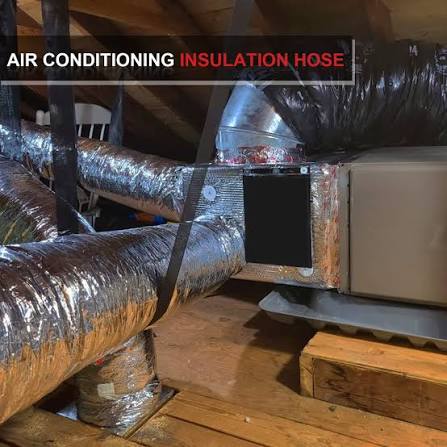
Insulated flexible duct may be used in suitable HVAC installations in:
- Offices
- Hotels
- Restaurants
- Retail buildings
- Schools
- Hospitals and institutions
- Apartment buildings
- Commercial developments
Large projects may require detailed HVAC schedules and specifications.
Contractors should provide drawings or bills of quantities when requesting larger quantities.
Insulated Flexible Duct for Industrial Applications
Insulated flexible duct may be suitable for selected industrial and engineering applications where the product specification meets the operating conditions.
Potential uses include:
- Equipment connections
- Ventilation
- Air distribution
- HVAC systems
- Temperature-controlled air distribution
- Suitable extraction applications
For specialised industrial environments, check the duct’s:
- Temperature suitability
- Chemical compatibility
- Fire-performance requirements
- Mechanical requirements
- Moisture resistance
- Manufacturer limitations
Do not assume a standard insulated flexible duct is suitable for every industrial application.
Insulated Flexible Duct for HVAC Contractors in Kenya
HVAC contractors may require several related products when installing insulated flexible duct.
These can include:
- HVAC grilles
- HVAC diffusers
- Ventilation fans
- Inline duct fans
- Air curtains
- Copper pipes
- Refrigerants
- Armaflex insulation
- Aluminium insulation tape
- Other HVAC accessories
Kingsman Engineering supplies HVAC, refrigeration, insulation and related engineering products, subject to current availability.
Contractors can provide a complete material schedule when requesting a quotation.
How to Measure for Insulated Flexible Duct
Before ordering, establish:
Diameter:
Confirm the required duct diameter.
Length:
Measure each duct run.
Quantity:
Count the number of separate runs.
Insulation:
Confirm that insulated duct is required.
Application:
State whether it is for air conditioning, ventilation, air distribution or another application.
Connections:
Identify what each end of the duct connects to.
Environment:
State whether the duct will be installed in a ceiling, plant room, exposed area or another location.
Project location:
Provide the delivery location.
For commercial and industrial projects, provide drawings, duct schedules or bills of quantities wherever possible.
How Much Insulated Flexible Duct Do I Need?
The required quantity depends on the number and length of duct runs.
A simple project assessment should identify:
- Number of duct runs
- Length of each run
- Diameter of each run
- Insulation requirement
- Number of outlets
- Number of branches
- Equipment connections
- Allowance required by the project specification
For larger installations, the HVAC drawings and bill of quantities should be the primary reference.
Buying Insulated Flexible Duct in Nairobi
If you are searching for:
- insulated flexible duct Nairobi
- insulated flexible duct supplier Nairobi
- insulated HVAC duct Nairobi
- insulated air duct Nairobi
- insulated flexible air duct Nairobi
- HVAC insulated duct Kenya
- insulated ducting Kenya
- air-conditioning flexible duct Nairobi
- insulated ventilation duct Nairobi
contact Kingsman Engineering & Industrial Insulation Ltd.
Provide your required size, quantity, application and project location so that current availability can be confirmed.
Insulated Flexible Duct Supply Across Kenya
Kingsman Engineering supplies HVAC and insulation products to customers in Nairobi and across Kenya.
Customers outside Nairobi can provide:
- Product required
- Duct size
- Quantity
- Delivery location
- Project requirements
Our team can advise on available supply arrangements
Insulated Flexible Duct Supply Across East Africa
Kingsman Engineering & Industrial Insulation Ltd serves customers and projects across the wider East African market.
For projects outside Kenya, contact us with:
- Product required
- Size
- Quantity
- Destination
- Project requirements
We can advise on available supply options.
Why Source Insulated Flexible Duct from Kingsman Engineering?
Kingsman Engineering supplies HVAC, refrigeration, insulation and related engineering products to contractors, technicians, engineers, businesses and project owners.
Our HVAC and insulation product categories include:
- Flexible ducting
- Insulated flexible ducting
- Non-insulated flexible ducting
- HVAC grilles
- HVAC diffusers
- Ventilation products
- Air curtains
- HVAC insulation
- Copper pipes
- Refrigerants
- Vacuum pumps
- Air-conditioning accessories
- Refrigeration materials
- Related engineering products
For projects requiring several HVAC materials, sourcing multiple products through one supplier can simplify procurement and project coordination.
Frequently Asked Questions About Insulated Flexible Duct in Kenya
1. What is insulated flexible duct?
Insulated flexible duct is flexible air ducting with an insulation layer surrounding the air-carrying duct.
2. What is insulated flexible duct used for?
It can be used for suitable air-conditioning, ventilation and air-distribution applications where thermal control or condensation management is required.
3. Is insulated flexible duct suitable for air conditioning?
Yes, insulated flexible duct is commonly considered for suitable air-conditioning applications, subject to the product specification and HVAC design.
4. Is insulated flexible duct suitable for ventilation?
Yes. It may be suitable for ventilation systems where insulation is required by the design or environmental conditions.
5. What is the difference between insulated and non-insulated flexible duct?
Insulated flexible duct includes an integrated insulation layer, while non-insulated flexible duct does not.
6. Does insulated flexible duct prevent condensation?
It can help reduce condensation risk when correctly specified and installed, but it does not guarantee that condensation will never occur.
7. Does insulated duct improve energy efficiency?
Proper insulation can reduce unwanted heat transfer, which may support HVAC energy performance. Overall system efficiency depends on many other factors as well.
8. What sizes of insulated flexible duct are available?
Flexible duct sizes can vary by manufacturer. Common nominal sizes include 4, 5, 6, 7, 8, 9, 10 and 12 inches, subject to current availability.
9. What is 12 inch insulated flexible duct in millimetres?
Twelve inches mathematically equals 304.8 mm, although the product may be sold under an approximately 300 mm nominal designation depending on the manufacturer.
10. What is 10 inch insulated flexible duct in millimetres?
Ten inches mathematically equals 254 mm.
11. What is 8 inch insulated flexible duct in millimetres?
Eight inches mathematically equals approximately 203.2 mm.
12. Can insulated flexible duct be used in a ceiling?
Yes. It can be used in suitable concealed ceiling installations when correctly routed, supported and protected.
13. Can insulated flexible duct connect to a diffuser?
Yes, where the duct diameter and diffuser connection are compatible.
14. Can insulated flexible duct connect to a grille?
Yes, where the grille connection and duct dimensions are compatible.
15. Can insulated flexible duct connect to a fan?
Yes, where the fan outlet and duct connection are compatible.
16. How much airflow can insulated flexible duct carry?
There is no universal airflow value. Airflow depends on duct diameter, velocity, length, bends, pressure, fan capacity and other system factors.
17. Can insulated flexible duct be used for exhaust?
Some products may be suitable for exhaust applications. Confirm the construction and application suitability before use.
18. What causes poor performance in flexible duct?
Potential causes include excessive compression, sharp bends, long runs, poor support, air leakage and inappropriate sizing.
19. Does flexible duct need support?
Yes. Flexible duct should be supported according to the manufacturer’s recommendations to help prevent sagging and excessive compression.
20. Can flexible duct be compressed during installation?
Flexible duct can accommodate routing, but excessive compression can restrict airflow and reduce system performance.
21. What insulation material is used in flexible duct?
Different products can use different insulation materials. Confirm the actual material and specification for the product being supplied.
22. How do I choose insulated flexible duct?
Consider diameter, airflow, air velocity, pressure, length, insulation requirements, operating environment, connection size and HVAC design.
23. Where can I buy insulated flexible duct in Kenya?
Contact Kingsman Engineering & Industrial Insulation Ltd for current availability, specifications and quotation information.
24. Do you supply insulated flexible duct outside Nairobi?
Kingsman Engineering supplies HVAC and insulation products to customers across Kenya, subject to availability and delivery arrangements.
25. Can Kingsman supply other HVAC products with insulated flexible duct?
Yes. Customers can enquire about grilles, diffusers, ventilation fans, air curtains, copper pipes, refrigerants, HVAC insulation and other HVAC-related products.